

ZMYM3 and ZNF292 mutations in chronic lymphocytic leukemia: clinical and biological implications
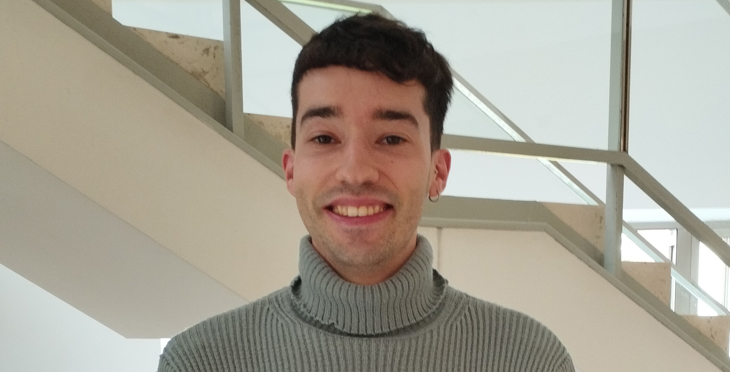
Alberto Rodríguez Sánchez
Centro de Investigación del Cáncer (CSIC-Universidad de Salamanca)
Introduction
Chronic Lymphocytic Leukemia (CLL) exhibits a highly heterogeneous clinical course driven by a complex genomic landscape. While the impact of major driver mutations is well-established, the functional and prognostic significance of the ’long tail’ of low-frequency driver mutations (<5%) remains poorly understood. In this context, large-scale Next-Generation Sequencing (NGS) have recurrently identified mutations in ZMYM3 and ZNF292 in ~3% of CLL patients at diagnosis. Although ZMYM3 may be implicated in chromatin modification, whereas ZNF292 is suggested to function as a transcription factor, the implications of these alterations are not completely defined. Therefore, we aim to determine the clinical impact of these mutations and to decipher the underlying mechanisms by which they contribute to CLL pathobiology.
Methods
To this end, a cohort of 488 CLL patients was analyzed by NGS using a customized panel with 54 CLL-related genes. Furthermore, we employed CRISPR/Cas9 genome editing in in wild-type (WT) CLL cell lines to reproduce the most frequent ZMYM3 and ZNF292 mutations reported in CLL patients, generating ZMYM3-mutated (ZMYM3MUT) and ZNF292-mutated (ZNF292MUT) isogenic models, respectively. Moreover, to evaluate the co-occurrence with NOTCH1 mutations, ZMYM3 mutations were introduced into NOTCH1-mutated cells (NOTCH1MUT) to obtain ZMYM3MUT NOTCH1MUT. In these cellular models, we conducted global transcriptomic analyses via RNA-sequencing (RNA-seq), evaluated chromatin accessibility using ATAC-seq and conducted functional assays. We complemented this in vitro approach with ex vivo validation using primary CLL samples.
ZMYM3 mutations
NGS analysis detected 32 ZMYM3 variants, predominantly manifested as loss-of-function events, which showed a strong co-occurrence with NOTCH1 alterations (60% of ZMYM3MUT patients were NOTCH1MUT). Clinically, ZMYM3 variants were associated with a higher treatment requirement and a significantly shorter time to first treatment (TFT, median: 35 vs. 52 months; p=0.010), stratifying clinical outcomes in early-stage cases (Binet A, median: 48 vs. 91 months; p=0.016). Multivariate analysis confirmed ZMYM3 mutations as an independent adverse prognostic factor in the entire cohort (HR=2.15, 95% CI=1.21-3.82, p=0.009) and within Binet A cases (HR=2.09, 95% CI=1.01-4.31, p=0.047).
In CRISPR/Cas9-edited cells, RNA-seq revealed that ZMYM3 mutations cooperate with NOTCH1 mutations to induce widespread transcriptional dysregulation. Moreover, transcriptomic analyses of cellular models and CLL patient samples further identified that ZMYM3 mutations impact histone acetylation, resulting in reduced chromatin accessibility. Functionally, ZMYM3 mutations resulted in histone H4 hypoacetylation and promoted apoptosis evasion through caspase downregulation. Therapeutically, primary ZMYM3-mutated CLL cells exhibited increased sensitivity to BCL-XL inhibition and BTK inhibition with ibrutinib.
ZNF292 mutations
27 ZNF292 mutations were identified in our cohort, primarily truncating variants (75%). ZNF292 variants were associated with a shorter TFT (median 30 vs. 52 months; p=0.028) and inferior overall survival (OS) (median 93 vs. 150 months, p=0.016), even among Rai 0/1 early-stage cases. Multivariate analysis confirmed that ZNF292 abnormalities, defined as either mutation or 6q deletion encompassing the locus, were independently associated with shorter TFT (HR=1.61, 95% CI=1.01-2.59, p=0.048).
Biologically, RNA-seq in CRISPR/Cas9-edited cells revealed that B-cell receptor signaling was upregulated in ZNF292MUT cells, while protein translation, cell cycle regulation, DNA damage response mechanisms and replication stress response were among the downregulated pathways. Functionally, ZNF292 mutations resulted in an extended S-phase of the cell cycle and reduced protein synthesis efficiency. Functionally, ZNF292MUT cells showed higher replication stress, increased DNA damage and defective response to induced replication stress, highlighted by lower CHK1 activation. Finally, we identified that BCL2 inhibition with venetoclax, CDK4/6 inhibitor palbociclib and PARP inhibitor Talazoparib may represent potential therapeutic options for treatment of ZNF292MUT CLL.
Conclusions
Our comprehensive study establishes both ZMYM3 and ZNF292 mutations as independent prognostic biomarkers that define subsets of CLL patients with more aggressive CLL. Beyond their clinical utility, we demonstrate that these alterations drive leukemogenesis through distinct mechanisms: epigenetic dysregulation and apoptosis evasion for ZMYM3, and altered cell cycle dynamics with defective replication stress response for ZNF292. Collectively, this work enhances our understanding of the heterogeneous genetic landscape of CLL, contributing to the development of personalized medicine and facilitating the optimization of treatment strategies.